In Springfield Township, the Roads You Love Are the Roads You'll Pay For
August 27, 2026
August 27, 2026
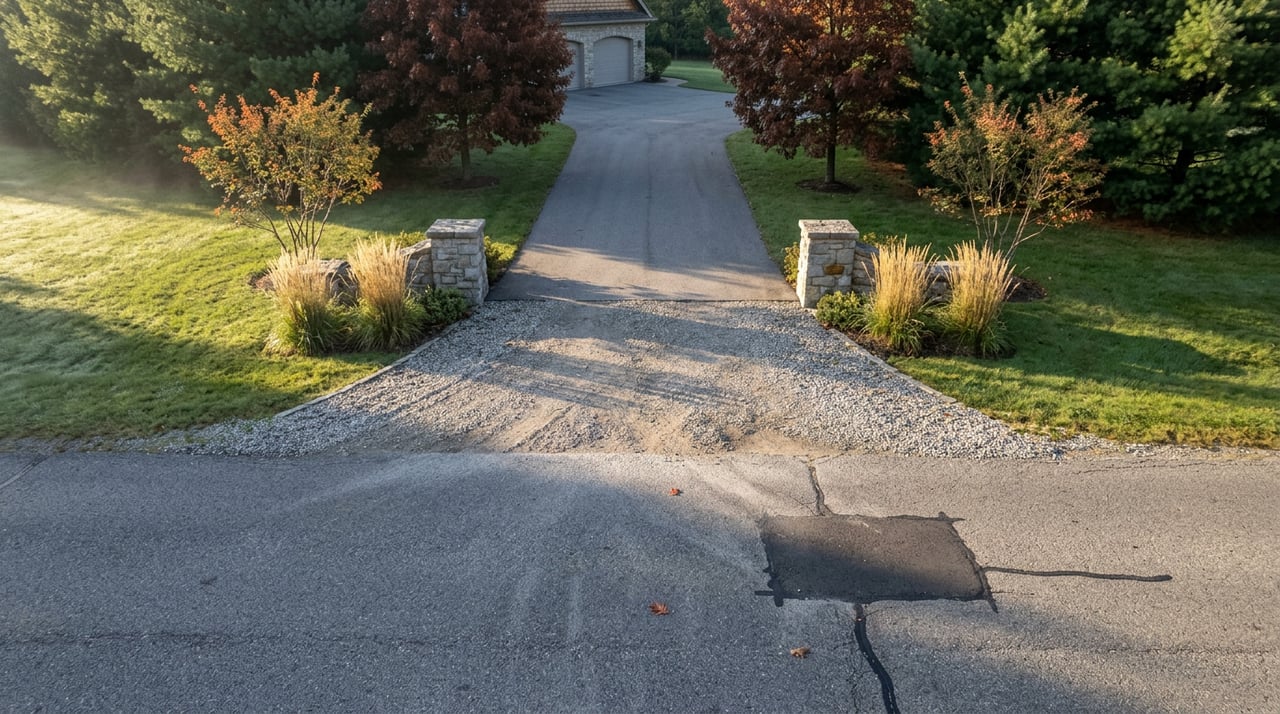
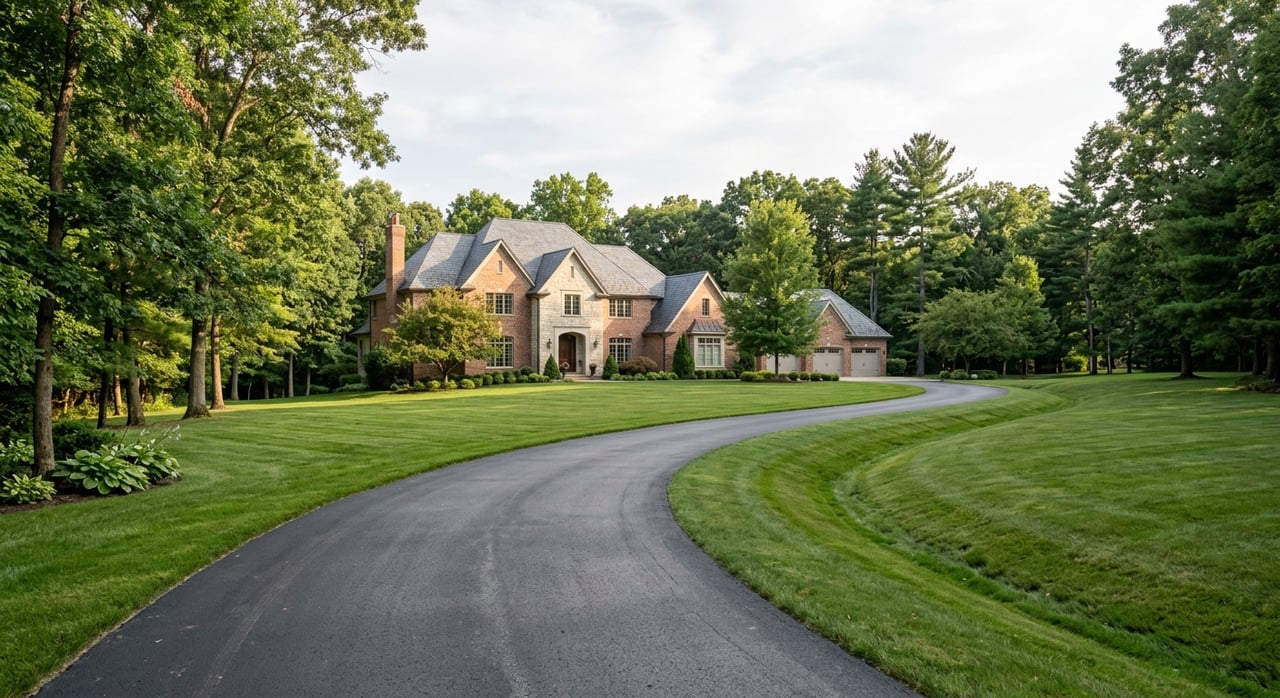
A buyer stands at the end of a long gravel driveway in Springfield Township, five acres behind her, mature oaks on both sides, and not another rooftop in sight. She loves the quiet. What she doesn't ask, because nobody thinks to, is who owns the two hundred feet of road between her future driveway and the pavement. That single question determines whether a future repave shows up as a modest tax line or a five-figure bill with her name on it.
Springfield Township markets itself on exactly this kind of space. The township's own materials describe tree-lined gravel roads winding through the countryside, and that rural character is a real draw for buyers weighing acreage against a reasonable commute to Pontiac or Flint. But the same low density that makes the lots feel private also changes the math on who pays when a road needs work. Fewer households sharing a stretch of pavement means each one absorbs a bigger slice of the bill. That's the part the listing photos never show.
Most roads in Springfield Township fall under the jurisdiction of the Road Commission for Oakland County, known locally as the RCOC. That sounds reassuring until you learn what RCOC jurisdiction actually covers. The township's own FAQ page is direct about this: the RCOC handles maintenance, repair, and improvement of public roads, and the township itself contributes to select high-priority projects like the Dixie Highway corridor work and the paving of Holcomb Road. Routine grading, gravel, and dust control on public gravel roads get covered through township-funded programs.
Repaving a deteriorated subdivision road is a different story. The framework goes back to a 1931 state law that lets the road commission levy costs against the properties that benefit from a repave, a mechanism the RCOC still describes on its own site as a Special Assessment District. Springfield Township's own roads page spells out the trigger: the process generally requires a Petition of Interest signed by at least 51 percent of the frontage along the road before RCOC will move forward. A public road doesn't get rebuilt because it looks bad. It gets rebuilt because a majority of the people living along it agreed to be billed for it.
A Detroit television investigation into this same statewide process, reported in a Livingston County township, captured the philosophy in one line from a township official:
"There will be no free riders."
If 51 percent of frontage owners want the repave, everyone along that road pays their share, whether they voted for it or not. The same reporting made a point that applies directly to a place like Springfield Township: homeowners in low-density neighborhoods with large lots end up carrying higher individual assessments, because the total project cost gets divided among fewer participating households. A half-mile of road serving twelve five-acre lots splits that bill twelve ways. The same half-mile serving forty quarter-acre lots in a denser subdivision closer to the village splits it forty ways. Same asphalt, same length, wildly different number on each owner's invoice.
Nearby Bloomfield Township, which runs one of the more transparent public road-funding programs in Oakland County, publishes real figures for comparison: subdivision road reconstruction projects there can run from $11,000 to $35,000 per lot, depending on scope and how many owners share the frontage. Springfield Township doesn't publish an identical per-lot figure, but the mechanism is the same statute, the same 51 percent trigger, and the same math working against low-density streets.
Plenty of Springfield Township's newer developments skip the county process entirely because their roads were built private from the start. The township's FAQ page confirms this directly: some roads in the township are private, and they are usually maintained by a homeowner's or condominium association rather than the county. If you're weighing a property inside one of these associations, it's worth reading up on how HOA life in Springfield Township actually works before you assume the dues line on a listing sheet tells the whole story.
That distinction changes everything about how a repair gets funded. Michigan condo and HOA law treats a private subdivision road as a common element, meaning it's owned collectively by every member of the association and paid for out of the assessments the association levies. Attorneys who handle these disputes for a living note a pattern that should concern any buyer looking at a private-road community: because developers often build these roads to bare minimum standards, and because Michigan winters are hard on asphalt, private roads frequently start failing within fifteen years of construction. When that happens, the full cost of replacement lands on the association's reserve fund, or on a special assessment the board levies against its own members if that reserve doesn't exist.
Michigan law does give townships a second lever here, separate from the RCOC process described above. Act 139 of 1972 lets a township board contract for the maintenance or improvement of a private road by creating its own special assessment district, using the same 51 percent frontage-ownership threshold as the county process. In practice, though, Springfield Township's own FAQ describes private roads as usually handled by the association itself, not the township. A buyer shouldn't assume a township-run assessment is waiting in the wings if the association's reserve fund comes up short. The default, absent an association vote or a township petition drive, is that the bill sits with the HOA and its members.
The township still has a small number of private gravel roads that predate its 1973 paving standards. For those, the township will provide chloride for dust control through a private contractor, but only if the property owners along that road request it and, implicitly, cover the arrangement themselves.
| Road type | Who owns it | Who pays for major repairs | How a repave gets triggered |
|---|---|---|---|
| Public subdivision road (RCOC) | Road Commission for Oakland County | Frontage owners via Special Assessment District | Petition signed by 51% of road frontage, then RCOC estimate |
| Private road in an HOA or condo development | The association, as a common element | Association reserve funds or a board-levied special assessment | Board decision, no county process required |
| Private gravel road predating 1973 | Property owners along the road | Owners, with township-provided chloride on request | Owner request to the township |
Notice what's missing from every row: a scenario where the township or the county simply absorbs the cost. Springfield Township contributes to specific arterial projects, and it funds dust control and gravel on public roads, but reconstruction and repaving of local subdivision streets rest with the owners in every version of this table.
None of this shows up on a walk-through, and it rarely comes up during a showing, because the road looks fine the day you see it. The questions that matter are about condition history and paper trail, not appearance:
This kind of question sits alongside the other systems buyers already know to check in a township like this one, like private wells and septic fields. It belongs in the same conversation, not a separate one, because it affects the same bottom line: what the property actually costs you to hold, not just what it costs to buy.
Does my homeowners insurance cover private road damage? Standard homeowner policies typically don't cover common-element infrastructure like a private road. That responsibility runs through the association's own insurance and reserve planning, which is exactly why reviewing those documents before closing matters.
If my road is public, will the county eventually repave it without a petition? Not on a fixed timeline. Public roads are patched, plowed, and gravel roads get dust control, but reconstruction requires the owner-driven Special Assessment District process described above. A road can sit in poor condition for years without a petition ever being filed.
Can a buyer request the SAD or reserve study history as part of due diligence? Yes. For public roads, the Road Commission for Oakland County can confirm whether a parcel's road has any assessment history. For private roads, the seller or the association should be able to provide the reserve study directly, and a request for it is a reasonable part of any purchase agreement's due diligence period.
Springfield Township's roads are part of what makes the place worth buying into. Understanding who actually pays to keep them driveable is part of buying in with your eyes open. If you're comparing specific properties here and want a second set of eyes on what a road's ownership status might mean for your offer, reach out to Sally Hendrix for a conversation grounded in what's actually recorded on that parcel, not just what the listing photos show.

We are dedicated to helping you find your dream home and assisting with any selling needs you may have. Contact us today to start your home searching journey!